
5 Ways to Make Your Drums Sound Like Boards of Canada
The Scottish techno duo are masters of lush, moving drum samples. Learn how to make your drum samples sound like theirs.
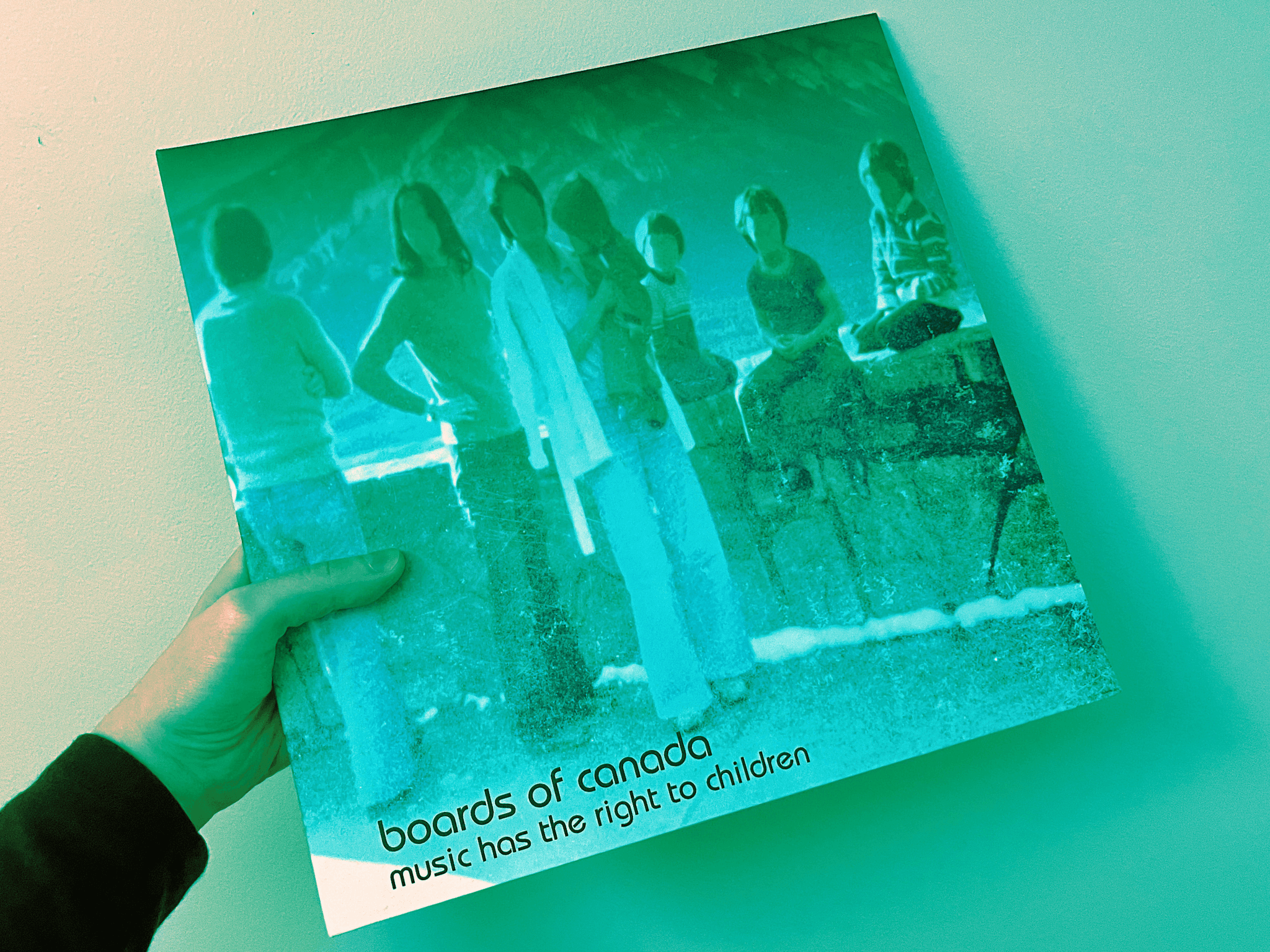
Few artists in the electronic music landscape evoke as much vivid, bittersweet nostalgia as the Scottish duo Boards of Canada. Across seminal turn-of-the-century albums like Music Has the Right to Children and their recent long-awaited return, Inferno, Michael Sandison and Marcus Eoin have built an unmatched sonic universe.
While their lush synth pads and eerie vignettes get a lot of attention, the true anchor of the BoC sound is their drums. They are warm, dusty, incredibly punchy, and deeply organic. They sound less like programmed machines and more like vintage breaks unearthed from a forgotten crate.
If you want to inject that trademark BoC warmth, grit, and Inferno-esque drive into your own productions, here is a step-by-step guide to emulating their iconic drum sound.
1. Start with the Right Foundation (Layering & Live Textures)
Boards of Canada rarely use raw, isolated drum machine samples. Instead, their sounds are a hybrid of vintage electronic gear and acoustic texture. They famously utilized older digital drum machines like the Alesis HR-16 and the Yamaha RY30 alongside classic Roland TR-808 kits—and on Inferno, they heavily integrated mic'd up live drum kits.
To emulate this today:
Layer an acoustic break over an electronic kit. Take a crunchy 70s funk break, low-pass filter it so you only keep the mid-range "dust," and layer it beneath a standard 808 kick and snare.
Look for "imperfect" samples. Avoid hyper-polished, modern sample packs. Look for vinyl rips, old radio broadcasts, or field recordings to find drums that already have a bit of history baked into them.
2. The Vintage Sampler Trick (Pitching Down)
A massive part of the BoC drum character comes from early digital sampling technology. Early samplers from Akai or E-mu changed pitch by physically slowing down the playback speed, which resulted in a beautiful, dark loss of high-end frequencies and a gritty elongation of the sound.
The Workflow: Take a crisp snare or hi-hat sample, pitch it up by 5 to 7 semitones in your DAW, and bounce it out. Then, import that new sample and pitch it back down to its original key. You’ll instantly notice a darker, crunchier, and more vintage-sounding transient.
3. Embrace Tape Saturation and VHS Degradation
If there is a holy grail in the BoC studio, it is tape. The duo is notorious for bouncing their tracks to cassette decks, reel-to-reels, and even cheap VHS recorders to achieve that signature "warble".
To get this in your DAW without buying a dusty VCR:
Use tape emulation plugins like Aberrant DSP SketchCassette, RC-20 Retro Color, or Chow Tape Model.
Focus on the "Wow and Flutter." Introduce subtle, random pitch modulation to your drum bus. This prevents the hats and snares from sounding static and gives them a living, breathing, unstable quality.
Drive the input. Don't be afraid to push the virtual tape saturation until the low-mids of your kick drum start to glue together into a warm, distorted hum.
4. Heavy Parallel Compression
BoC drums don’t just sit in the mix; they aggressively interact with it. To get that sucking, breathing compression effect, you need to squash your drums.
Instead of destroying your main drum track, use parallel compression. Send your drum channels to an auxiliary bus. On that bus, insert a compressor with a fast attack and a slow release, and slam the threshold down until the drums sound completely smashed and distorted. Blend this "crushed" auxiliary track gently underneath your clean, dynamic drum track. This gives you the best of both worlds: the punchy transients of the clean drums and the gritty, pumping energy of the compressed ones.
5. Break the Grid (Micro-Timing and Human Swing)
Whether they are programming a sequence or chopping up live takes for Inferno, nothing kills a Boards of Canada vibe faster than perfectly quantized, robotic drums. Their grooves always feel slightly lazy, hypnotic, and human.
Turn off the grid. Manually nudge your hi-hats slightly behind the beat to create a relaxed, sluggish groove.
Slightly delay your snares. A snare that hits just a few milliseconds late creates a heavy, stoned-sounding "layback" effect that is a staple of downtempo electronic music.
Vary the velocity. Real drummers never hit the instrument with the exact same force twice. Ensure your hi-hat accent patterns rise and fall to keep the loop moving naturally.
The Final Mixdown
To tie it all together, roll off the extreme high-ends of your master drum bus using a gentle low-pass filter. In the analog world of the 1970s and 80s, frequencies above 15kHz rarely survived the recording process. By gently taming those pristine digital highs, your drums will instantly retreat into that warm, comforting, and wonderfully hazy space that Boards of Canada calls home.
Latest Blogs

5 Pieces of Aphex Twin-Approved Gear
From budget Korg monosynths to vintage Casio samplers, look inside the hardware toolkit of electronic music’s ultimate myth.

Why You Should Disassemble Your Music Gear
There's no better way to learn the in's and out's of your gear than by taking it apart. (And putting it back together, of course).
Why You Should Disassemble Your Music Gear
There's no better way to learn the in's and out's of your gear than by taking it apart. (And putting it back together, of course).

Why Are Cassette Tapes Having a Comeback?
From underground indie labels to major pop stars, audio cassettes are experiencing a massive renaissance. Here's why listeners are pressing play on analog.
Why Are Cassette Tapes Having a Comeback?
From underground indie labels to major pop stars, audio cassettes are experiencing a massive renaissance. Here's why listeners are pressing play on analog.
Gear Tribune
The ultimate hub for music nerds. Explore deep-dive discussions on gear, hardware, software, streaming, and the tech shaping modern music.
© 2025 Elrond — Published with Framer & Hedwik
5 Ways to Make Your Drums Sound Like Boards of Canada
The Scottish techno duo are masters of lush, moving drum samples. Learn how to make your drum samples sound like theirs.
Few artists in the electronic music landscape evoke as much vivid, bittersweet nostalgia as the Scottish duo Boards of Canada. Across seminal turn-of-the-century albums like Music Has the Right to Children and their recent long-awaited return, Inferno, Michael Sandison and Marcus Eoin have built an unmatched sonic universe.
While their lush synth pads and eerie vignettes get a lot of attention, the true anchor of the BoC sound is their drums. They are warm, dusty, incredibly punchy, and deeply organic. They sound less like programmed machines and more like vintage breaks unearthed from a forgotten crate.
If you want to inject that trademark BoC warmth, grit, and Inferno-esque drive into your own productions, here is a step-by-step guide to emulating their iconic drum sound.
1. Start with the Right Foundation (Layering & Live Textures)
Boards of Canada rarely use raw, isolated drum machine samples. Instead, their sounds are a hybrid of vintage electronic gear and acoustic texture. They famously utilized older digital drum machines like the Alesis HR-16 and the Yamaha RY30 alongside classic Roland TR-808 kits—and on Inferno, they heavily integrated mic'd up live drum kits.
To emulate this today:
Layer an acoustic break over an electronic kit. Take a crunchy 70s funk break, low-pass filter it so you only keep the mid-range "dust," and layer it beneath a standard 808 kick and snare.
Look for "imperfect" samples. Avoid hyper-polished, modern sample packs. Look for vinyl rips, old radio broadcasts, or field recordings to find drums that already have a bit of history baked into them.
2. The Vintage Sampler Trick (Pitching Down)
A massive part of the BoC drum character comes from early digital sampling technology. Early samplers from Akai or E-mu changed pitch by physically slowing down the playback speed, which resulted in a beautiful, dark loss of high-end frequencies and a gritty elongation of the sound.
The Workflow: Take a crisp snare or hi-hat sample, pitch it up by 5 to 7 semitones in your DAW, and bounce it out. Then, import that new sample and pitch it back down to its original key. You’ll instantly notice a darker, crunchier, and more vintage-sounding transient.
3. Embrace Tape Saturation and VHS Degradation
If there is a holy grail in the BoC studio, it is tape. The duo is notorious for bouncing their tracks to cassette decks, reel-to-reels, and even cheap VHS recorders to achieve that signature "warble".
To get this in your DAW without buying a dusty VCR:
Use tape emulation plugins like Aberrant DSP SketchCassette, RC-20 Retro Color, or Chow Tape Model.
Focus on the "Wow and Flutter." Introduce subtle, random pitch modulation to your drum bus. This prevents the hats and snares from sounding static and gives them a living, breathing, unstable quality.
Drive the input. Don't be afraid to push the virtual tape saturation until the low-mids of your kick drum start to glue together into a warm, distorted hum.
4. Heavy Parallel Compression
BoC drums don’t just sit in the mix; they aggressively interact with it. To get that sucking, breathing compression effect, you need to squash your drums.
Instead of destroying your main drum track, use parallel compression. Send your drum channels to an auxiliary bus. On that bus, insert a compressor with a fast attack and a slow release, and slam the threshold down until the drums sound completely smashed and distorted. Blend this "crushed" auxiliary track gently underneath your clean, dynamic drum track. This gives you the best of both worlds: the punchy transients of the clean drums and the gritty, pumping energy of the compressed ones.
5. Break the Grid (Micro-Timing and Human Swing)
Whether they are programming a sequence or chopping up live takes for Inferno, nothing kills a Boards of Canada vibe faster than perfectly quantized, robotic drums. Their grooves always feel slightly lazy, hypnotic, and human.
Turn off the grid. Manually nudge your hi-hats slightly behind the beat to create a relaxed, sluggish groove.
Slightly delay your snares. A snare that hits just a few milliseconds late creates a heavy, stoned-sounding "layback" effect that is a staple of downtempo electronic music.
Vary the velocity. Real drummers never hit the instrument with the exact same force twice. Ensure your hi-hat accent patterns rise and fall to keep the loop moving naturally.
The Final Mixdown
To tie it all together, roll off the extreme high-ends of your master drum bus using a gentle low-pass filter. In the analog world of the 1970s and 80s, frequencies above 15kHz rarely survived the recording process. By gently taming those pristine digital highs, your drums will instantly retreat into that warm, comforting, and wonderfully hazy space that Boards of Canada calls home.

Written by Hailey Stevenson
Hailey is a musician and photographer based out of Philadelphia.
Latest Blogs
5 Pieces of Aphex Twin-Approved Gear
From budget Korg monosynths to vintage Casio samplers, look inside the hardware toolkit of electronic music’s ultimate myth.
Why You Should Disassemble Your Music Gear
There's no better way to learn the in's and out's of your gear than by taking it apart. (And putting it back together, of course).
Why You Should Disassemble Your Music Gear
There's no better way to learn the in's and out's of your gear than by taking it apart. (And putting it back together, of course).
Why Are Cassette Tapes Having a Comeback?
From underground indie labels to major pop stars, audio cassettes are experiencing a massive renaissance. Here's why listeners are pressing play on analog.
Why Are Cassette Tapes Having a Comeback?
From underground indie labels to major pop stars, audio cassettes are experiencing a massive renaissance. Here's why listeners are pressing play on analog.
Gear Tribune
The ultimate hub for music nerds. Explore deep-dive discussions on gear, hardware, software, streaming, and the tech shaping modern music.
© 2025 Elrond — Published with Framer & Hedwik
5 Ways to Make Your Drums Sound Like Boards of Canada
The Scottish techno duo are masters of lush, moving drum samples. Learn how to make your drum samples sound like theirs.
Few artists in the electronic music landscape evoke as much vivid, bittersweet nostalgia as the Scottish duo Boards of Canada. Across seminal turn-of-the-century albums like Music Has the Right to Children and their recent long-awaited return, Inferno, Michael Sandison and Marcus Eoin have built an unmatched sonic universe.
While their lush synth pads and eerie vignettes get a lot of attention, the true anchor of the BoC sound is their drums. They are warm, dusty, incredibly punchy, and deeply organic. They sound less like programmed machines and more like vintage breaks unearthed from a forgotten crate.
If you want to inject that trademark BoC warmth, grit, and Inferno-esque drive into your own productions, here is a step-by-step guide to emulating their iconic drum sound.
1. Start with the Right Foundation (Layering & Live Textures)
Boards of Canada rarely use raw, isolated drum machine samples. Instead, their sounds are a hybrid of vintage electronic gear and acoustic texture. They famously utilized older digital drum machines like the Alesis HR-16 and the Yamaha RY30 alongside classic Roland TR-808 kits—and on Inferno, they heavily integrated mic'd up live drum kits.
To emulate this today:
Layer an acoustic break over an electronic kit. Take a crunchy 70s funk break, low-pass filter it so you only keep the mid-range "dust," and layer it beneath a standard 808 kick and snare.
Look for "imperfect" samples. Avoid hyper-polished, modern sample packs. Look for vinyl rips, old radio broadcasts, or field recordings to find drums that already have a bit of history baked into them.
2. The Vintage Sampler Trick (Pitching Down)
A massive part of the BoC drum character comes from early digital sampling technology. Early samplers from Akai or E-mu changed pitch by physically slowing down the playback speed, which resulted in a beautiful, dark loss of high-end frequencies and a gritty elongation of the sound.
The Workflow: Take a crisp snare or hi-hat sample, pitch it up by 5 to 7 semitones in your DAW, and bounce it out. Then, import that new sample and pitch it back down to its original key. You’ll instantly notice a darker, crunchier, and more vintage-sounding transient.
3. Embrace Tape Saturation and VHS Degradation
If there is a holy grail in the BoC studio, it is tape. The duo is notorious for bouncing their tracks to cassette decks, reel-to-reels, and even cheap VHS recorders to achieve that signature "warble".
To get this in your DAW without buying a dusty VCR:
Use tape emulation plugins like Aberrant DSP SketchCassette, RC-20 Retro Color, or Chow Tape Model.
Focus on the "Wow and Flutter." Introduce subtle, random pitch modulation to your drum bus. This prevents the hats and snares from sounding static and gives them a living, breathing, unstable quality.
Drive the input. Don't be afraid to push the virtual tape saturation until the low-mids of your kick drum start to glue together into a warm, distorted hum.
4. Heavy Parallel Compression
BoC drums don’t just sit in the mix; they aggressively interact with it. To get that sucking, breathing compression effect, you need to squash your drums.
Instead of destroying your main drum track, use parallel compression. Send your drum channels to an auxiliary bus. On that bus, insert a compressor with a fast attack and a slow release, and slam the threshold down until the drums sound completely smashed and distorted. Blend this "crushed" auxiliary track gently underneath your clean, dynamic drum track. This gives you the best of both worlds: the punchy transients of the clean drums and the gritty, pumping energy of the compressed ones.
5. Break the Grid (Micro-Timing and Human Swing)
Whether they are programming a sequence or chopping up live takes for Inferno, nothing kills a Boards of Canada vibe faster than perfectly quantized, robotic drums. Their grooves always feel slightly lazy, hypnotic, and human.
Turn off the grid. Manually nudge your hi-hats slightly behind the beat to create a relaxed, sluggish groove.
Slightly delay your snares. A snare that hits just a few milliseconds late creates a heavy, stoned-sounding "layback" effect that is a staple of downtempo electronic music.
Vary the velocity. Real drummers never hit the instrument with the exact same force twice. Ensure your hi-hat accent patterns rise and fall to keep the loop moving naturally.
The Final Mixdown
To tie it all together, roll off the extreme high-ends of your master drum bus using a gentle low-pass filter. In the analog world of the 1970s and 80s, frequencies above 15kHz rarely survived the recording process. By gently taming those pristine digital highs, your drums will instantly retreat into that warm, comforting, and wonderfully hazy space that Boards of Canada calls home.
Written by Hailey Stevenson
Hailey is a musician and photographer based out of Philadelphia.
Latest Blogs

Koss Porta Pro Review: The 40-Year-Old Classic Revisited
Since 1984, the Koss Porta Pros have proven it is possible make cheap, durable, and great-sounding headphones that look

TS vs TRS Cables: What's the Difference?
TS and TRS cables look almost identical, but they can make a big difference in your music production and performance.
5 Pieces of Aphex Twin-Approved Gear
From budget Korg monosynths to vintage Casio samplers, look inside the hardware toolkit of electronic music’s ultimate myth.
Gear Tribune
The ultimate hub for music nerds. Explore deep-dive discussions on gear, hardware, software, streaming, and the tech shaping modern music.
© 2025 Elrond — Published with Framer & Hedwik